What "AI marketing automation" actually means in 2026
Five years ago, "marketing automation" meant a drip sequence and a lead score. Today the term is doing a lot more work: it covers everything from email send-time prediction to AI that writes the email, designs the creative, replies to your comments, and decides what to publish next. The catch is that most tools picked one slice of that and slapped "AI" on the box. So the real question isn't "which tool has AI?" — it's "which tool automates the part of marketing that's actually eating your week?"
We split the market into two honest camps. The first is the classic CRM-and-email lineage — HubSpot, ActiveCampaign, Brevo, Customer.io, Mailchimp, Omnisend. These are excellent at lifecycle: capturing a contact, scoring them, and firing the right message at the right moment. Their "AI" is mostly assistive — subject-line suggestions, predictive sending, a copy helper. The second camp is the newer agent-based platforms that try to do the creative and publishing work itself, not just route messages. KAIROS is in that second camp.
This guide ranks both. We lead with KAIROS because it's what we build, and we'll be the first to tell you it's overkill if all you need is a newsletter. But if you're a small team trying to run content, social, SEO, ads and analytics without hiring five specialists, the calculus changes — and that's exactly the gap the old guard doesn't fill.
How we picked
- Breadth of automation — does it actually do the work, or just suggest and route?
- Honest AI utility — real outcomes vs. a chatbot bolted onto an old product
- Pricing transparency — what you pay at a small-team scale, not the enterprise sticker
- Time-to-value — how fast a non-specialist gets something useful live
- Where it genuinely wins, and where it quietly falls short
We use several of these tools in production and have onboarded customers off the others. Ratings are pulled from G2 where we're confident; we omit them rather than invent a number. KAIROS is ranked first because it's ours — judge the reasoning, not the position.
At a glance
| Tool | Best for | Starts at |
|---|---|---|
| KAIROS | Small teams who want the whole marketing engine run, not just emails routed | From $49/mo |
| HubSpot | Funnel-heavy B2B that lives in a CRM | Free + from $20/mo (Marketing Hub from ~$800/mo) |
| ActiveCampaign | Deep automation logic for SMBs | From $19/mo |
| Brevo | Email + SMS on a budget, francophone-friendly | Free + from $9/mo |
| Customer.io | Product-led teams with event data | From $100/mo |
| Mailchimp | Beginners and simple newsletters | Free + from $13/mo |
| Omnisend | Ecommerce email + SMS flows | Free + from $16/mo |
See it on your business
Want this run for you?
KAIROS runs the whole marketing loop — content, SEO, ads — from a weekly plan you approve. We love showing founders how it works on their actual business.
We test every new content, SEO/GEO & ads tool the moment it ships.
The 7 best AI marketing automation tools, ranked
1. KAIROS
Our pickFrom $49/mo (7-day free trial)A team of 10+ AI marketing specialists that actually does the work.
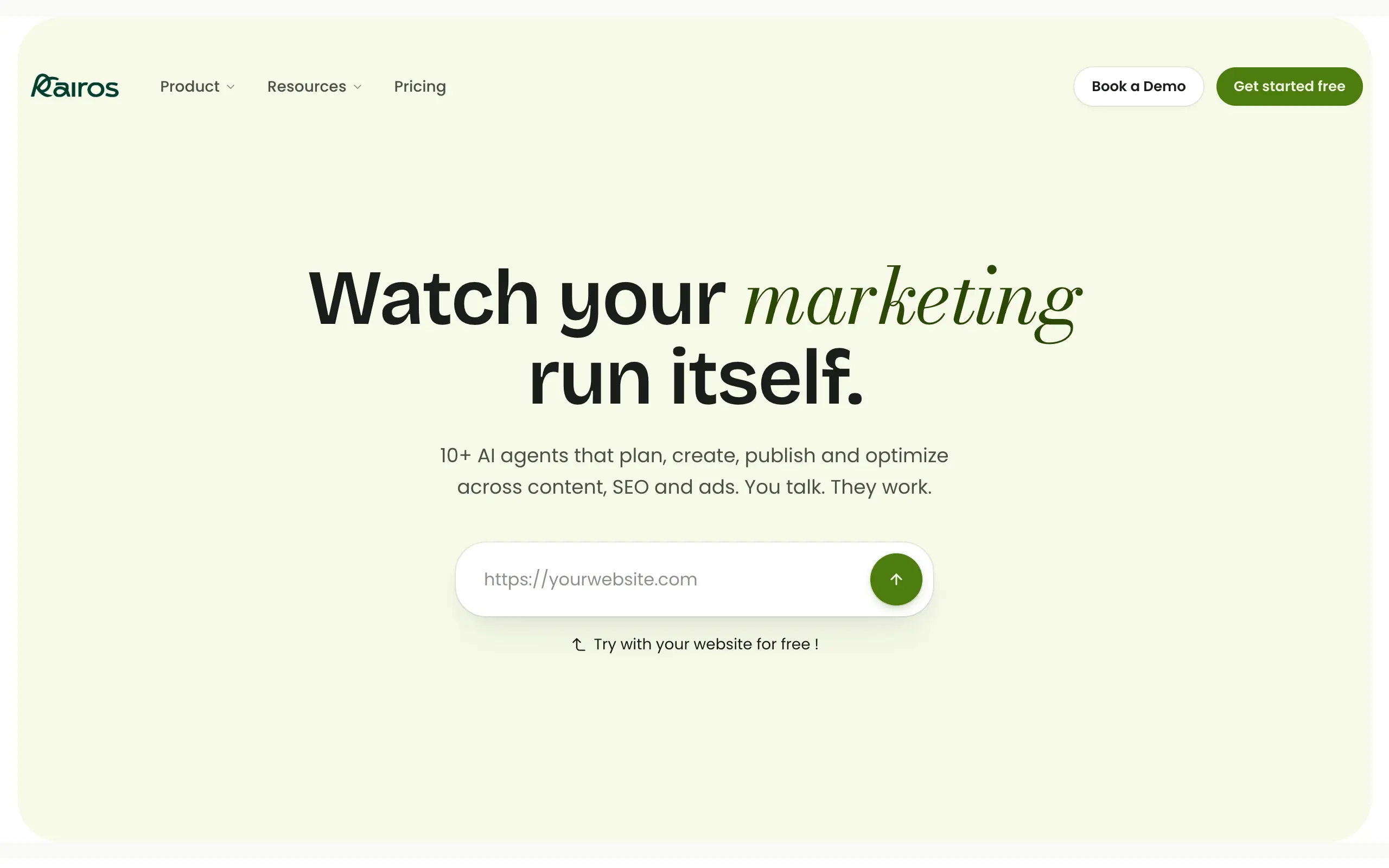
Most tools on this list automate the plumbing of marketing — who gets which email, when. KAIROS automates the labor: the writing, the design, the publishing, the community replies, the ad iteration, and the SEO/GEO visibility work. Instead of a single AI assistant, you get 10+ specialized agents, each scoped to one job, coordinated by a team lead. You don't configure a workflow builder; you brief the team like you'd brief a freelancer, and they come back with drafts, creatives and a plan. For a founder doing marketing on the side of running everything else, that's a categorically different kind of leverage.
Here's the honest part: KAIROS is newer than HubSpot or Mailchimp, and it's deliberately overkill if your only need is sending a weekly newsletter — Brevo or Mailchimp will do that for a fraction of the mental overhead. KAIROS also isn't a CRM; it won't replace your sales pipeline or deal scoring. Where it wins is breadth of execution: if your problem is "I have no time and no team to produce and distribute marketing across channels," nothing on this list does as much of that work for you. If your problem is "I have great content and just need to route it to segments," pick a classic tool and save money.
Best for: Founders and small teams who need content, social, SEO, ads and analytics run end-to-end without hiring five people
Key features
- 10+ specialized agents — research (Scout), copy (Scribe), design (Prism), publishing (Beacon), replies (Pulse), ads (Boost), SEO & GEO (Compass), analytics (Lens) and a lead (Kairos) that coordinates them
- Goes beyond routing: drafts the post, designs the creative, schedules it, and replies to comments
- GEO / AI-engine visibility — optimizes to get you cited inside ChatGPT, Gemini and AI answers, not just ranked on Google
- Conversation-first workspace — you brief the team in chat, they execute and report back
Strengths
- Does the creative and publishing work itself, not just message routing
- 10+ agents cover the whole stack — content, social, SEO/GEO, ads, analytics — in one place
- Genuinely useful for francophone and emerging markets, not just US-centric flows
Limitations
- Newer than the incumbents; smaller integration ecosystem so far
- Overkill (and not a CRM) if you only need email or lead scoring
2. HubSpot
Free + from $20/mo (Marketing Hub Pro from ~$800/mo)The all-in-one CRM that grew a marketing automation suite around it.
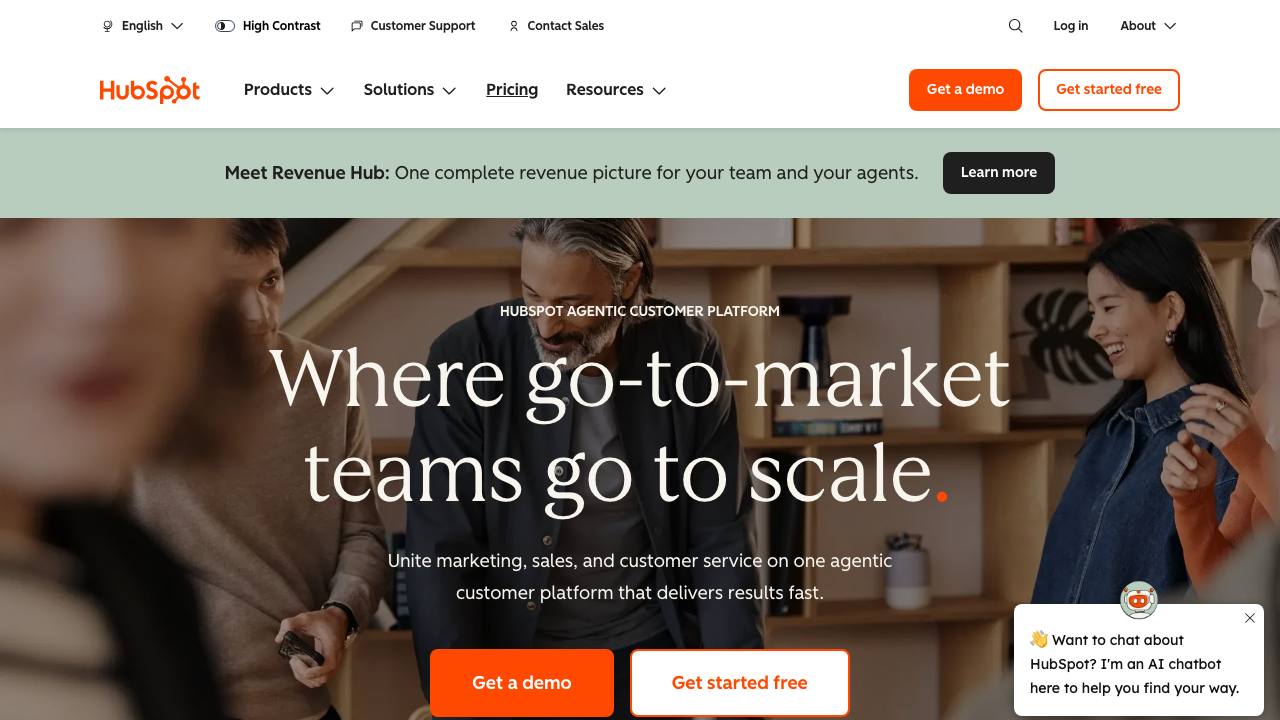
HubSpot is the safe, comprehensive answer when marketing has to talk to sales. Its CRM is genuinely excellent, the workflow builder is mature, and lifecycle reporting is hard to beat. If your bottleneck is orchestrating a B2B funnel — MQLs, lead scoring, hand-offs to sales — HubSpot remains the category leader, and its Breeze AI layer makes the assistive parts (drafting, summarizing, scoring) smoother every quarter.
The catch is cost and scope. Marketing Hub gets expensive fast once you need the Pro tier, and the AI is assistive rather than autonomous — it helps you write and route, but it doesn't design your creatives, run your community replies, or chase AI-engine visibility. Compared to KAIROS, HubSpot is a system you operate, not a team that executes for you. Brilliant if you have someone to drive it; heavy if you're a solo founder who just needs the work done.
Best for: Funnel-heavy B2B teams that want marketing, sales and service in one CRM
Key features
- Best-in-class CRM with marketing, sales and service hubs that share one contact record
- Visual workflow automation with branching, lead scoring and lifecycle stages
- Breeze AI for content assistance, predictive lead scoring and chat
- Enormous app marketplace and integration ecosystem
Strengths
- Unmatched CRM-plus-marketing depth for B2B
- Mature, reliable automation and reporting
- Massive integration and template ecosystem
Limitations
- Pro/Enterprise pricing escalates quickly
- AI assists you; it doesn't do the creative or distribution work itself
3. ActiveCampaign
From $19/moPowerful automation logic for SMBs who love building flows.
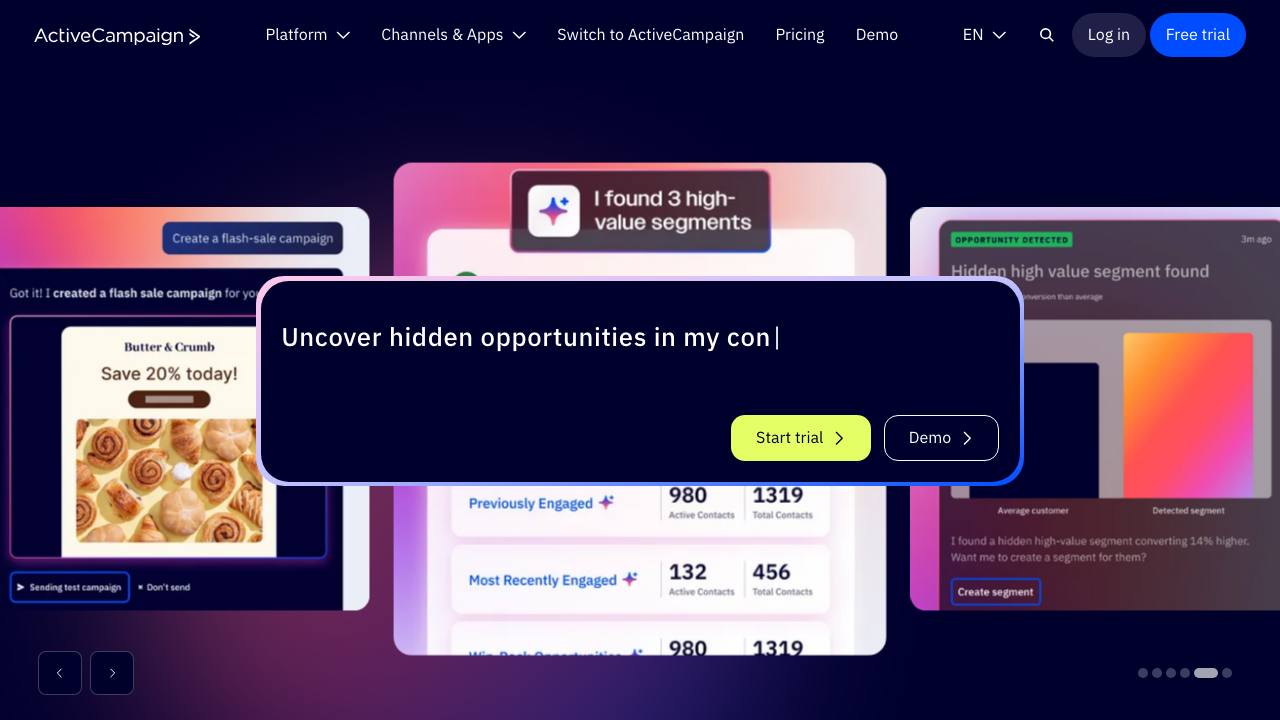
ActiveCampaign is the power user's email automation tool. Its flow builder is more flexible than most, letting you branch on behavior, tags, and CRM data with real precision. For an SMB that wants HubSpot-style automation depth at a fraction of the price, it's one of the best value picks on the market, and its predictive features quietly improve open and click rates without much fuss.
But ActiveCampaign lives in the email-and-CRM world. Its AI is assistive — it'll help you write a subject line or pick a send time, not produce a week of social posts and designed creatives. If your weekly pain is "build and ship marketing across channels," you'll still be doing most of that by hand. KAIROS aims at exactly that production gap, while ActiveCampaign owns the lifecycle-automation gap — different problems, and you may genuinely want both.
Best for: SMBs that want deep, branching email/CRM automation without enterprise pricing
Key features
- Best-in-class visual automation builder with granular conditions and triggers
- Lightweight CRM and sales automation included
- Predictive sending and AI-assisted content generation
- Strong deliverability and a deep template library
Strengths
- Exceptional automation flexibility for the price
- Includes a usable CRM and sales automation
- Reliable deliverability
Limitations
- Steeper learning curve than Mailchimp or Brevo
- AI is assistive; no creative production or multi-channel distribution
4. Brevo
Free + from $9/moEmail, SMS and WhatsApp automation that doesn't punish small lists.
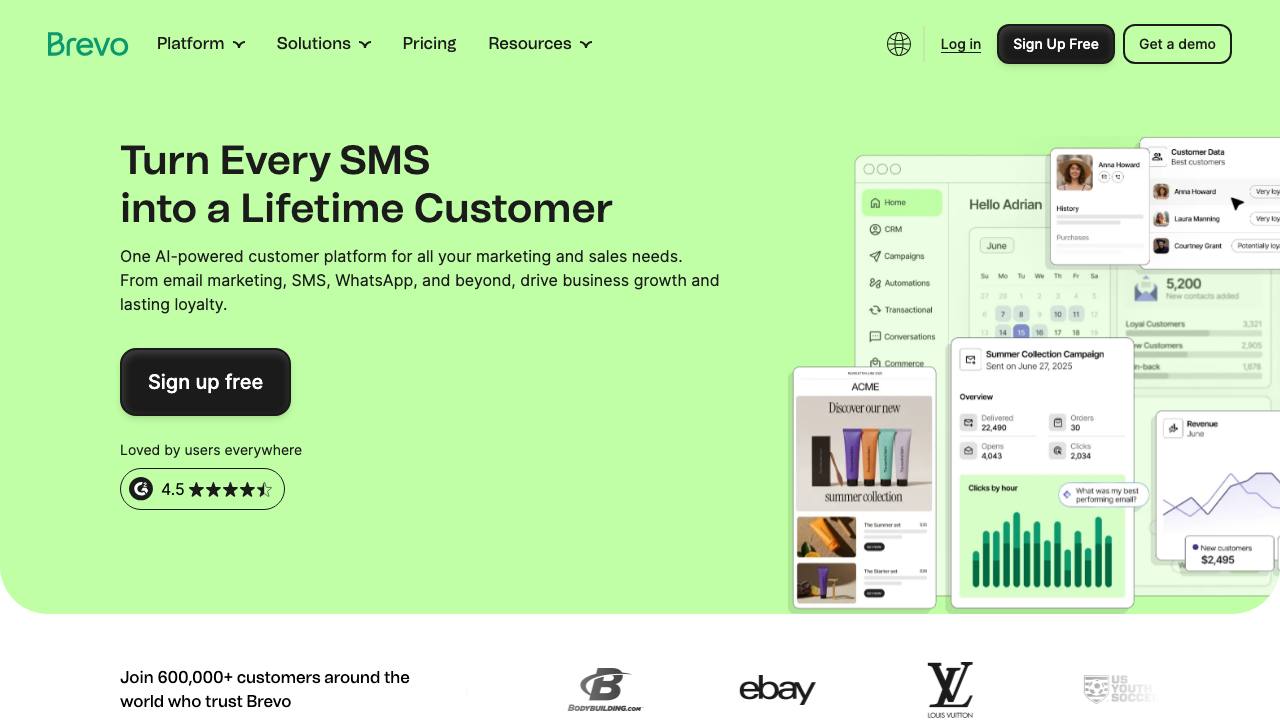
Brevo (formerly Sendinblue) is the pragmatist's pick. Because it bills on emails sent rather than contacts stored, it stays cheap as your list grows — a real advantage for businesses with big, low-frequency audiences. It bundles SMS and WhatsApp, has a usable automation builder, and is one of the friendlier options for francophone and European teams who want local support and clean GDPR handling.
Brevo's automation and AI are solid but conventional: segmentation, workflows, send-time tuning. It's a sending platform, not a marketing team — it won't write your blog, design your posters, or work on getting you cited by AI engines. We rate it highly for what it is, and we genuinely recommend it for lean newsletter-and-SMS use. If your ambition is broader than messaging, that's where a KAIROS-style agent platform takes over.
Best for: Budget-conscious teams and francophone businesses wanting email + SMS in one place
Key features
- Generous free tier billed by emails sent, not contacts stored
- Email, SMS, WhatsApp and on-site chat in one platform
- Visual automation workflows and a lightweight CRM
- Strong presence and support in francophone markets
Strengths
- Pricing scales gracefully with big lists
- Email + SMS + WhatsApp in one tool
- Francophone-friendly and GDPR-clean
Limitations
- Reporting and segmentation are shallower than HubSpot/ActiveCampaign
- Messaging-focused; no creative production or AI-engine visibility
5. Customer.io
From $100/moBehavioral, event-driven messaging for product-led teams.
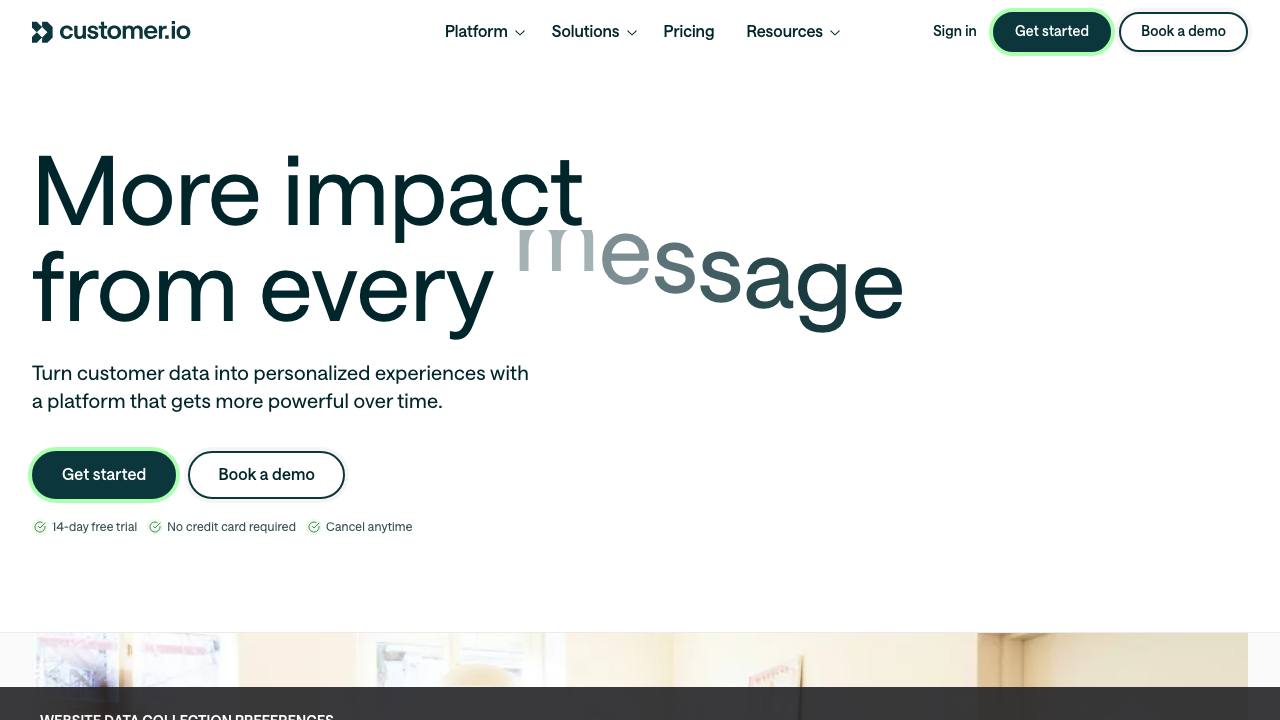
Customer.io is the tool of choice when your messaging needs to react to what users actually do inside your product. Pipe in events, and you can build precise, behavior-driven journeys — onboarding nudges, churn saves, usage milestones — that simpler email tools can't touch. For product-led SaaS, it's frequently the right answer and a genuine step up in sophistication.
That power comes with prerequisites: you need clean event data and usually an engineer to wire it up, and the entry price reflects its target customer. It's also firmly a messaging engine — it orchestrates communication beautifully but doesn't create content or run channels for you. KAIROS sits at the opposite end: less about reacting to event streams, more about producing and distributing marketing. Many teams run a content engine and a behavioral engine side by side.
Best for: Product and growth teams that trigger messages off real product events
Key features
- Event-based triggers driven by your product data stream
- Cross-channel: email, push, SMS, in-app and webhooks
- Powerful segmentation on real-time behavioral data
- API-first design that engineers actually like
Strengths
- Best-in-class event-driven, behavioral automation
- True cross-channel orchestration
- Developer-friendly and API-first
Limitations
- Needs clean event data and technical setup
- Higher entry price; pure messaging, no content creation
6. Mailchimp
Free + from $13/moThe friendly front door to email marketing for beginners.
Mailchimp earned its ubiquity by being the gentlest on-ramp into email marketing. The editor is friendly, the templates look good out of the box, and a non-marketer can ship a decent campaign in an afternoon. For a small list and simple sends, it's still a perfectly reasonable, low-stress choice with enough automation to cover the basics.
The trade-offs show up as you grow: contact-based pricing climbs faster than usage-based rivals, automation depth lags ActiveCampaign, and the AI features are light assists rather than real leverage. It's a sending tool with a creative helper, not a system that produces and distributes your marketing. Great as a first newsletter platform; if you want a team doing the work, you'll outgrow it quickly.
Best for: Beginners, solopreneurs and simple newsletters that value ease over depth
Key features
- The easiest onboarding in email marketing
- Drag-and-drop builder with polished templates
- Basic automations, landing pages and a creative assistant
- Huge ecosystem of integrations and guides
Strengths
- Easiest possible learning curve
- Polished templates and editor
- Big integration ecosystem
Limitations
- Contact-based pricing gets expensive as you scale
- Shallow automation and AI versus dedicated tools
7. Omnisend
Free + from $16/moEmail + SMS automation purpose-built for ecommerce.
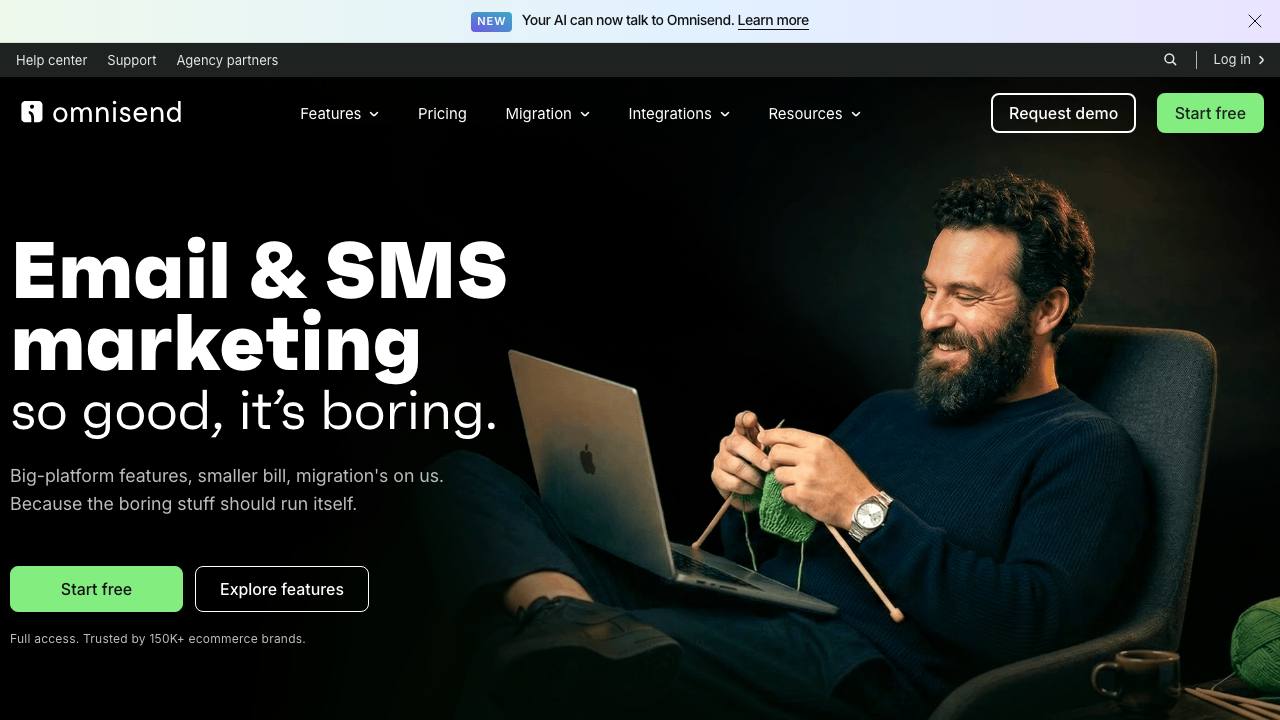
Omnisend is unapologetically built for online stores. Its templates and automations map directly to ecommerce moments — cart recovery, browse abandonment, post-purchase upsells — so a store can be live with revenue-driving flows in a day. The SMS integration is tight, the reporting is revenue-first, and the ecommerce platform integrations are genuinely deep. For a Shopify merchant, it punches well above its price.
Outside ecommerce, that specialization becomes a ceiling — if you're not selling products with a catalog and order events, a lot of Omnisend's value doesn't apply. And like the rest of this email-lineage group, its AI assists with copy and timing rather than producing creative or running channels. KAIROS is channel- and content-broad where Omnisend is ecommerce-deep; the right pick depends entirely on whether your marketing revolves around a product catalog.
Best for: Shopify and ecommerce stores running cart and post-purchase flows
Key features
- Pre-built ecommerce flows — abandoned cart, welcome, post-purchase
- Email and SMS unified in one automation
- Deep Shopify, WooCommerce and BigCommerce integrations
- Product-aware segmentation and revenue reporting
Strengths
- Ecommerce flows that work out of the box
- Unified email + SMS with revenue reporting
- Deep store-platform integrations
Limitations
- Value drops sharply outside ecommerce
- AI is assistive; no broad content or channel automation
How to choose the right one for you
Forget feature checklists for a second. Match the tool to the single job that's actually eating your week.
If you only need to send a clean newsletter on a budget…
Pick: Brevo or Mailchimp — don't overpay for power you won't use
If you run a b2b funnel and need marketing wired to sales…
Pick: HubSpot — the CRM-plus-automation depth is worth it
If you want deep branching automation without enterprise pricing…
Pick: ActiveCampaign — the best value flow builder around
If you trigger messages off real product events…
Pick: Customer.io — built for behavioral, event-driven journeys
If you run a shopify store on cart and post-purchase flows…
Pick: Omnisend — ecommerce automation out of the box
If you have no team and need content, social, seo, ads and analytics actually produced and shipped…
Pick: KAIROS — 10+ agents that do the work, not just route messages
The verdict
If your marketing problem is routing — getting the right message to the right contact at the right time — the classic tools win, and the right one depends on your channel and budget: Brevo and Mailchimp for simple sends, ActiveCampaign for automation depth, HubSpot for B2B funnels, Customer.io for product events, Omnisend for ecommerce. But if your problem is production — you have no team and the work itself isn't getting done — that's a different category, and it's the one we built KAIROS for. With 10+ specialized agents producing content, designing creatives, publishing, replying, running ads and chasing AI-engine visibility, it's less a tool you operate and more a team that executes. Overkill for a newsletter; genuinely transformative for a small team trying to do everything. Try it free for 7 days and judge for yourself.