What "AI social media management" actually means now
Two years ago, "AI" in a social tool meant a button that spat out three caption variants and a few hashtags. Useful for ten seconds, forgettable by lunch. In 2026 the bar is higher. The good tools now understand your brand voice, generate the visuals, decide when to post, watch the comments, and tell you what's actually working — without you babysitting a content calendar at 11pm on a Sunday.
But here's the honest catch most listicles won't tell you: the word "AI" is doing a lot of marketing heavy-lifting. Some tools are genuinely autonomous; others just wrapped GPT around a publish button and tripled the price. The difference matters most when you're a small team or a solo founder, because you don't have a junior to clean up the AI's mess.
This guide ranks seven tools by how much real work they take off your plate. We're upfront: we make one of them (KAIROS), and it's ranked first — but we'll also tell you exactly when one of the cheaper, narrower tools is the smarter buy. If you only need to schedule posts, you do not need an AI marketing team. Read on.
How we picked
- Depth of automation — does it just suggest, or does it actually do the work (write, design, schedule, reply, report)?
- Output quality — are the captions and visuals usable as-is, or do they need a heavy human rewrite every time?
- Channel coverage — Instagram, LinkedIn, TikTok, X, Facebook, Pinterest, YouTube and the rest of the alphabet soup.
- Honest pricing — what you actually pay once you add the seats and channels a real team needs, not the headline number.
- Who it's genuinely for — we matched each tool to a real user (solo creator, agency, in-house team) instead of pretending one size fits all.
We ran each tool on a live brand for at least two weeks: same content brief, same channels, same goal. Ratings reference public G2 scores where we're confident; we omit them rather than invent numbers.
At a glance
| Tool | Best for | Starts at |
|---|---|---|
| KAIROS | Running your entire marketing — not just scheduling | From $49/mo |
| Buffer | Simple, affordable scheduling for solos | Free + from $6/mo per channel |
| Hootsuite | Big teams that need governance & inbox | From $99/mo |
| Vista Social | Agencies juggling many clients | Free + from $39/mo |
| FeedHive | Solo creators who recycle evergreen content | From $19/mo |
| Predis.ai | AI-generated carousels & video posts | Free + from $32/mo |
| Ocoya | Fast AI copy + design in one window | From $19/mo |
See it on your business
Want this run for you?
KAIROS runs the whole marketing loop — content, SEO, ads — from a weekly plan you approve. We love showing founders how it works on their actual business.
We test every new content, SEO/GEO & ads tool the moment it ships.
The 7 best AI social media management tools
1. KAIROS
Our pickFrom $49/mo (7-day free trial)A team of 10+ AI agents that run your marketing, not just your calendar.
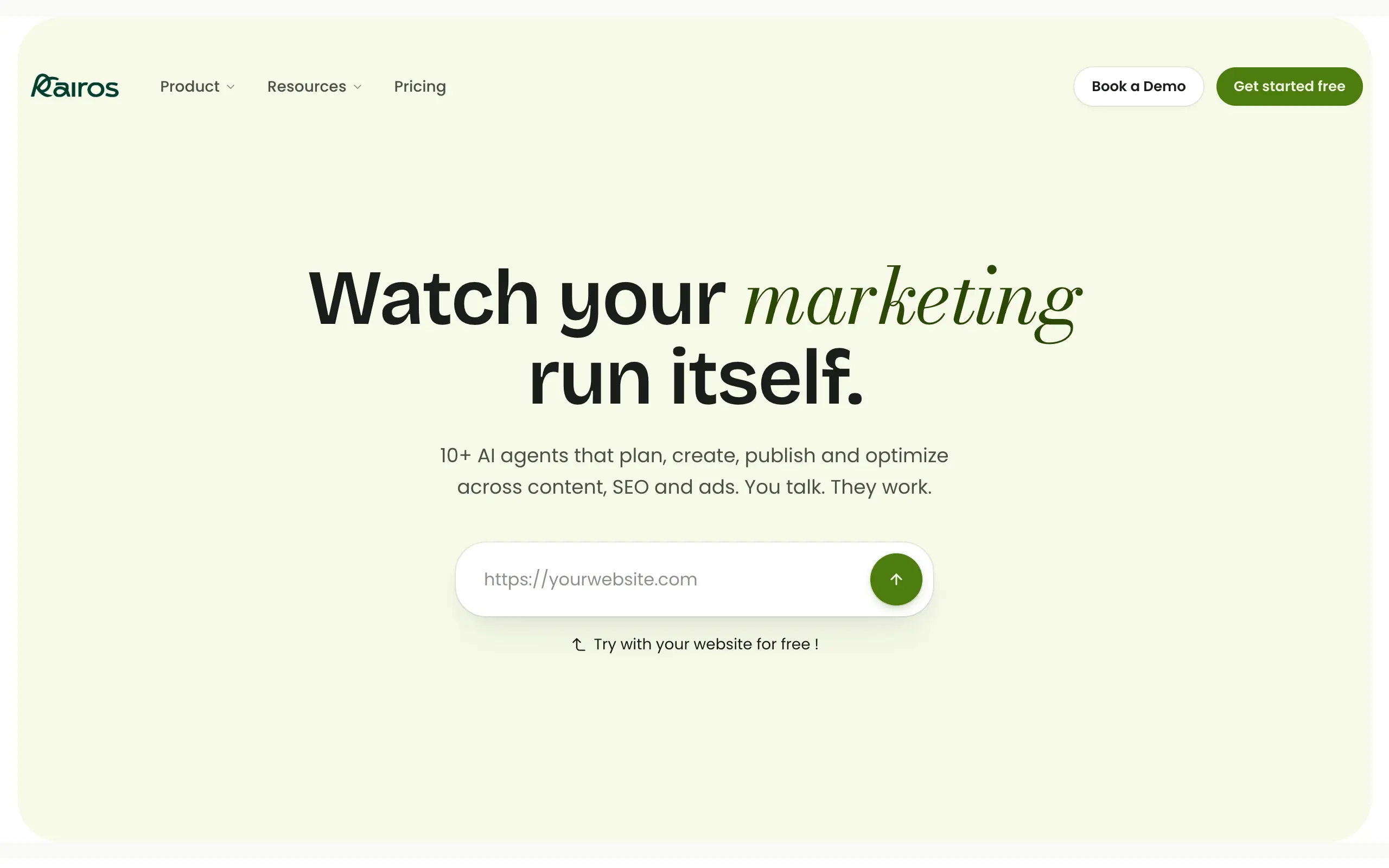
Most tools in this list are schedulers with an AI feature. KAIROS is the opposite: an AI marketing team where scheduling is just one of the things it does. You brief it once, and a roster of 10+ agents divides the labor — one researches your market, one writes, one designs the visual, one picks the slot and publishes, one watches the comments, one reads the numbers back to you. It behaves less like software you operate and more like a junior team you delegate to. For a solo founder who has been doing all of that manually, the time saving is the whole point.
We'll be honest about the trade-off. KAIROS is newer than Buffer or Hootsuite, and it is genuinely overkill if all you want is to queue ten tweets. There's a bit more setup up front because you're teaching it your brand, not just connecting an account. If your need is narrowly "schedule posts cheaply," Buffer will serve you better and cost less. KAIROS earns the top spot for the larger, more common job: actually running social — and the rest of your marketing — as one coordinated system instead of five disconnected apps. Pricing starts at $49/mo with a 7-day free trial, so you can see whether the team-of-agents model clicks before committing.
Best for: Founders and small teams who want social handled end-to-end — strategy, content, design, publishing, replies, and analytics — without hiring.
Key features
- 10+ specialized agents: Scout (research), Scribe (copy), Prism (visuals), Beacon (publishing), Pulse (community replies), Boost (paid ads), Compass (SEO & AI-engine visibility), Lens (analytics) and more shipping monthly
- Generates on-brand captions AND the matching designed creatives in your style — not stock-looking AI slop
- Decides the posting cadence and schedule for you, then publishes across channels
- Reads comments and drafts community replies; reports back on what actually moved the needle
Strengths
- Does the whole job — write, design, schedule, reply, analyze — not just one slice
- Visuals are actually designed in your brand style, not generic AI templates
- Replaces a stack of disconnected tools (and the cost of stitching them together)
Limitations
- Newer than the incumbents, so a shorter public track record
- Overkill — and more setup than you need — if you only want bare scheduling
2. Buffer
Free + from $6/mo per channelThe friendly, no-nonsense scheduler that's been doing one thing well for years.
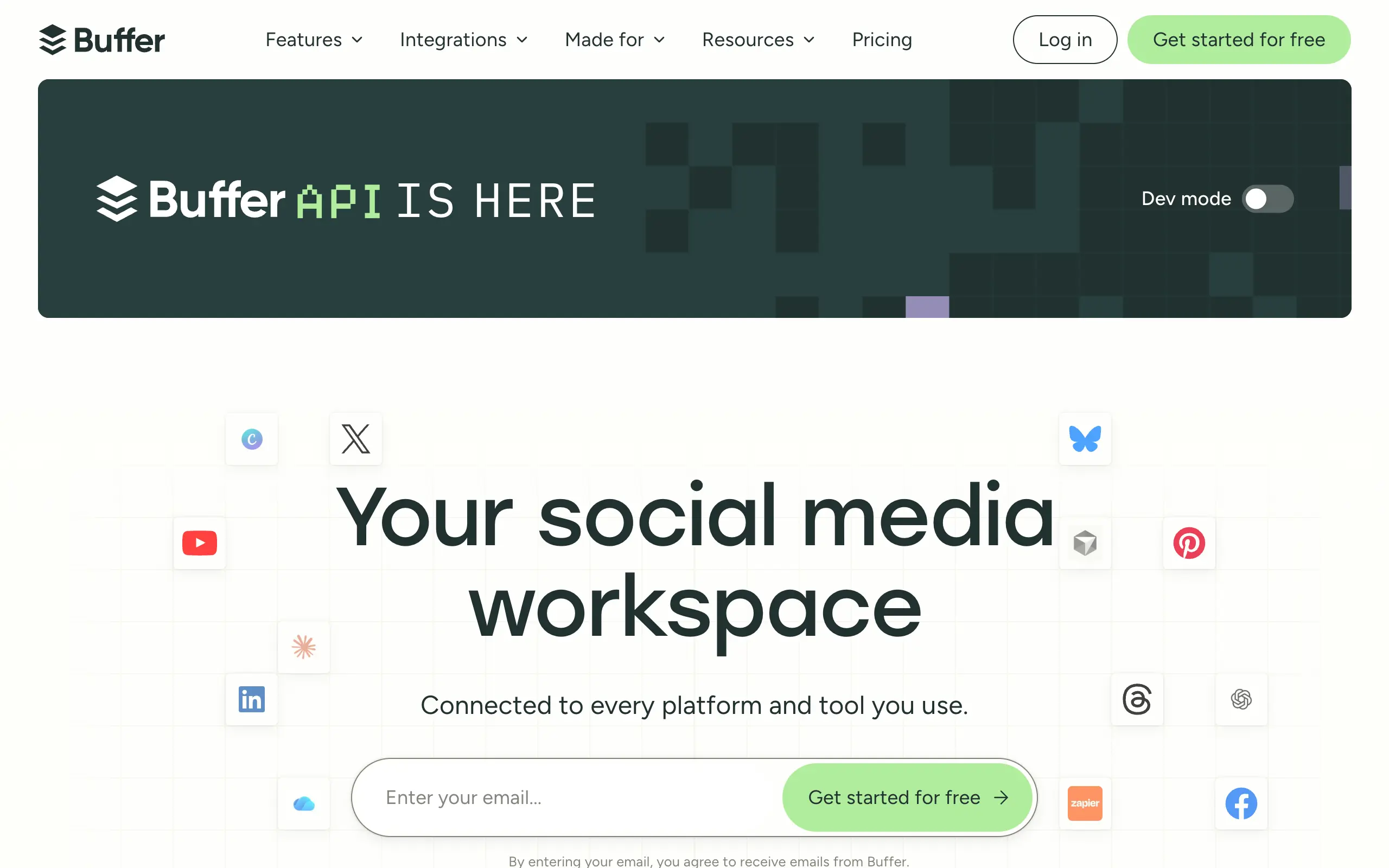
Buffer is the tool we'd recommend to a friend who just wants to post consistently without thinking about it. The interface is calm, the free plan is real, and the per-channel pricing means a solo creator can run it for almost nothing. Its AI Assistant will brainstorm captions and adapt a single idea to each platform's format, which covers 80% of what a one-person brand needs. For pure, affordable scheduling, it's hard to beat.
Where it stops is exactly where KAIROS begins. Buffer's AI suggests; it doesn't decide or execute a strategy. It won't design your visuals, it won't run your comment replies, and it certainly won't coordinate your ads and SEO. As your needs grow past "queue some posts," you end up bolting on a design tool, an inbox tool, and an analytics tool — and now you're managing a stack. Buffer is the right answer for simplicity, and the wrong answer if you wanted the work actually done for you.
Best for: Solo creators and very small businesses who want clean, affordable scheduling with a light AI assist.
Key features
- Dead-simple queue-based scheduling across all major networks
- AI Assistant for caption ideas, rewrites and repurposing a post per platform
- Per-channel pricing that stays cheap for one or two profiles
- Clean analytics and a genuinely nice mobile app
Strengths
- Genuinely affordable, with a usable free tier
- One of the cleanest, least intimidating UIs in the category
- Reliable publishing across every major network
Limitations
- AI assists with copy only — no design, replies, or strategy
- Costs add up fast once you add many channels and seats
3. Hootsuite
From $99/moThe enterprise veteran built for big teams, approvals, and a unified inbox.
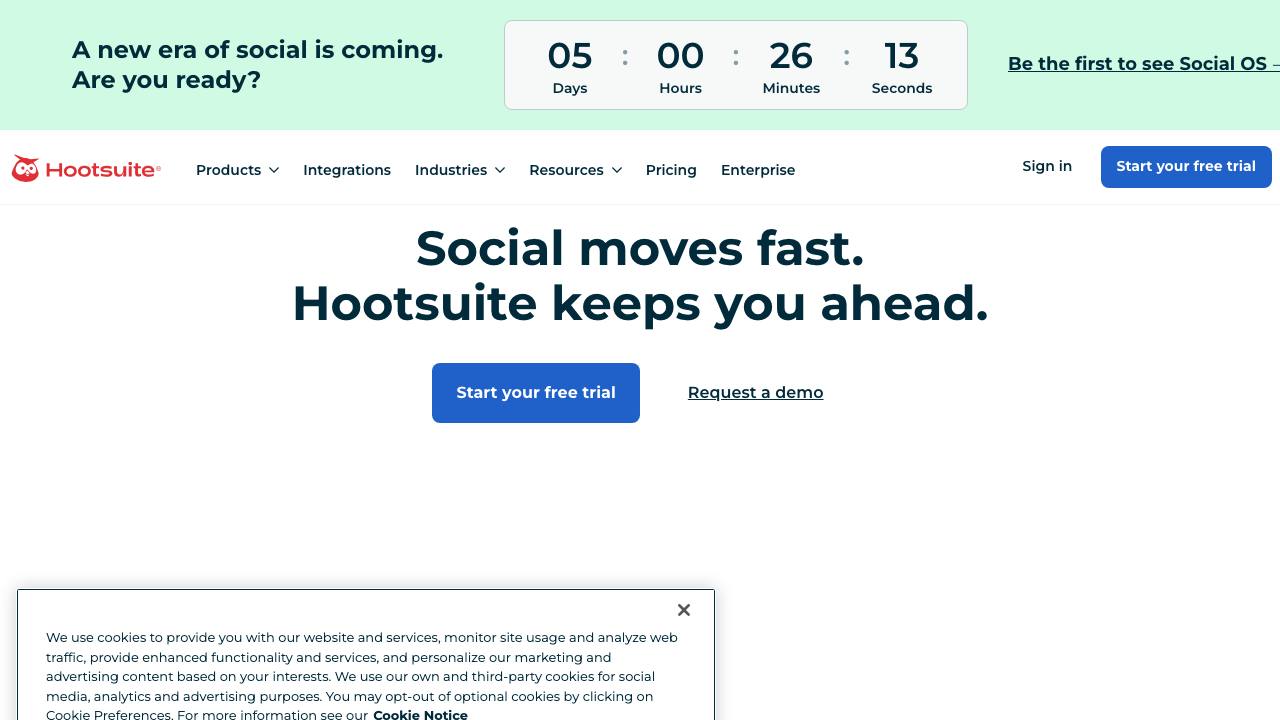
Hootsuite has been the default for big-team social management for over a decade, and it shows in the places that matter to enterprises: approval chains, granular permissions, a unified inbox, and listening. If you have five people touching the same accounts and a legal team that wants sign-off, Hootsuite's governance is genuinely strong, and its OwlyWriter AI handles routine caption work fine.
The cost is the conversation, though. Hootsuite gets expensive fast, the interface carries years of feature accumulation, and the AI is an assistant bolted onto a publishing suite rather than the engine of it. KAIROS comes at the same problem from the other direction: instead of a big team operating a big tool, it's a small team delegating to AI agents that do the producing. If you're an enterprise with headcount and compliance needs, Hootsuite is a safe, capable pick. If you're a lean team that wants the work produced rather than just managed, it's a heavy, pricey choice.
Best for: Larger teams and brands that need user roles, approval workflows, social listening, and a single inbox for every message.
Key features
- Unified social inbox for messages, comments and mentions across networks
- OwlyWriter AI for captions, ideas and repurposing
- Robust team roles, approval workflows and governance
- Social listening and competitive benchmarking add-ons
Strengths
- Best-in-class governance, roles and approval workflows
- Strong unified inbox and social listening
- Battle-tested at enterprise scale
Limitations
- Expensive, and pricing climbs quickly with add-ons
- AI is a helper, not an autonomous producer; UI feels heavy
4. Vista Social
Free + from $39/moThe agency-favorite scheduler with deep client management and a fair price.
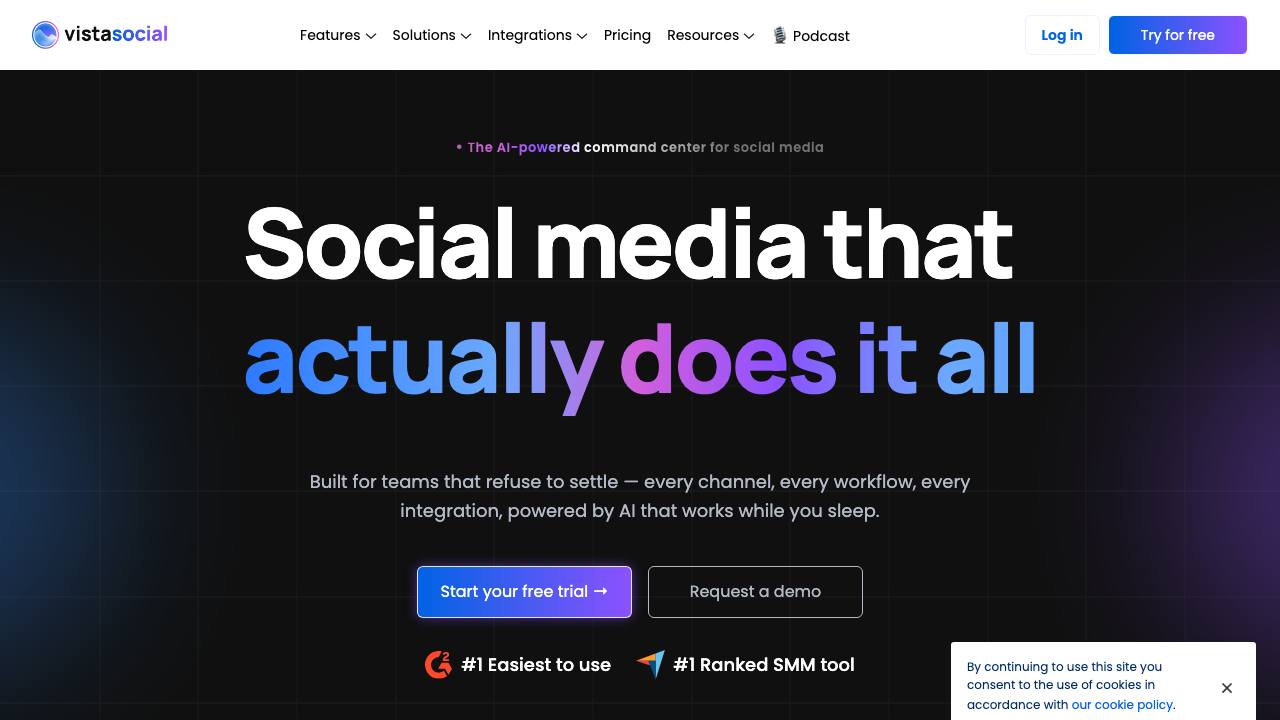
Vista Social has quietly become an agency darling, and its sky-high G2 score isn't an accident. It nails the unglamorous things agencies actually need: clean multi-client workspaces, client approval flows, white-label reporting, and even review management — all at a price that undercuts the legacy players. The AI handles captions and posting-time suggestions competently, and the smart-publishing options are flexible.
It's still fundamentally a scheduler-and-management platform, though, with AI as a side feature. It won't design your creatives in-brand, and it won't autonomously run a content strategy across channels and ad spend the way KAIROS aims to. For an agency whose value is its own human strategists and just needs a great operations layer underneath them, Vista Social is arguably the best pick on this list. For a small brand that wants the strategy and production handled for it, the AI here doesn't go far enough.
Best for: Agencies and freelancers managing many client accounts who want reviews, reports and approvals without enterprise pricing.
Key features
- Strong multi-client workspaces, approvals and white-label reports
- Built-in review management (Google, Yelp, etc.) alongside social
- AI assistant for captions and an optimal-time recommender
- Generous channel and profile limits for the price
Strengths
- Excellent value for multi-client agency work
- Approvals, white-label reports and review management built in
- Very high user satisfaction
Limitations
- AI is a feature, not the engine — no in-brand design generation
- More operations layer than autonomous producer
5. FeedHive
From $19/moA clever creator-first scheduler that recycles your best content automatically.
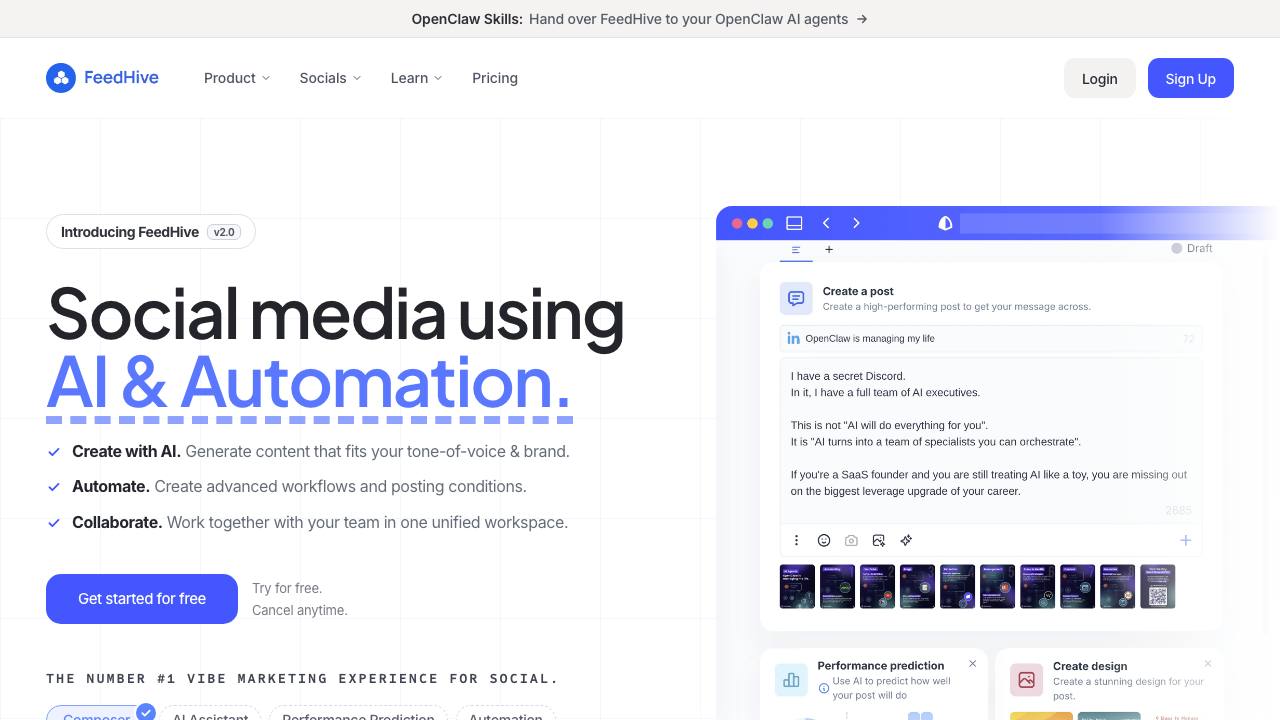
FeedHive is built for the indie creator who lives on X and LinkedIn, and it has a few genuinely clever tricks: AI performance prediction, content recycling so your best evergreen posts keep working, and conditional automations like auto-commenting when a post takes off. For a personal brand trying to grow a text-first audience, it's smart, affordable, and pleasant to use.
Its scope is deliberately narrow, which is both its strength and its ceiling. FeedHive is excellent at recycling and timing text content; it is not a visual-content engine, a full multi-channel command center, or a marketing team. If your growth is text-and-thread-driven, it may be all you need. If you want designed creatives, community management, ads and SEO orchestrated together, that's a different category of tool — which is where KAIROS sits.
Best for: Solo creators and personal brands on X and LinkedIn who want to recycle evergreen posts and predict performance.
Key features
- AI that predicts how a post will perform before you publish it
- Content recycling and categories to keep evergreen posts circulating
- Conditional posting (e.g. auto-add a comment if a post hits X likes)
- Clean, creator-focused composer with AI writing help
Strengths
- Smart content recycling and performance prediction
- Affordable and genuinely creator-friendly
- Neat conditional-posting automations
Limitations
- Narrow focus — weak for visual/design-heavy brands
- Not a multi-discipline marketing tool
6. Predis.ai
Free + from $32/moAI that turns a text prompt into a finished carousel or video post.
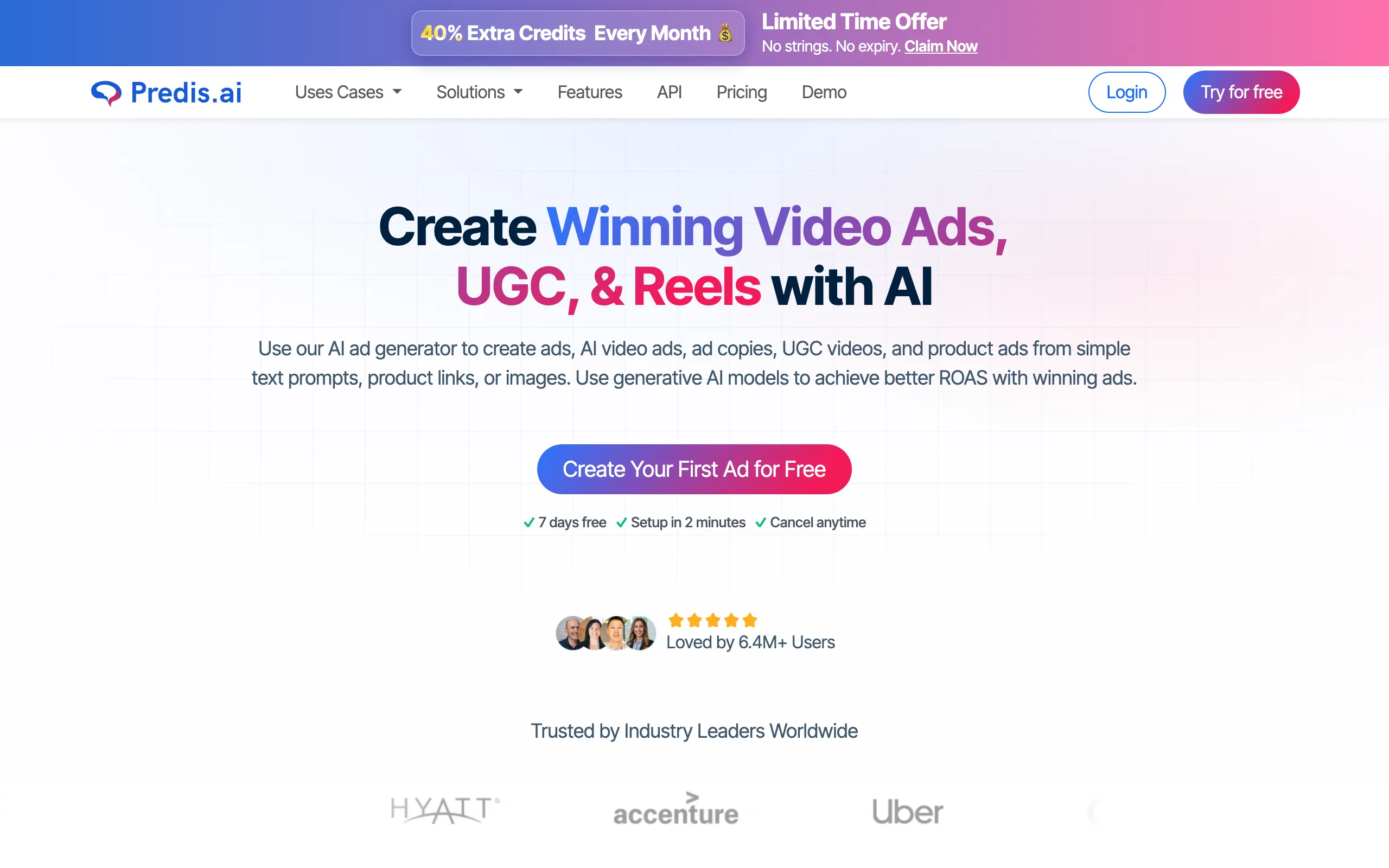
Predis.ai leans hard into the part of AI most schedulers skip: actually making the visual content. Feed it a topic and it'll produce a carousel or a short video you can publish, which is a real time-saver for a small business that has no designer. Its competitor analysis and bulk-generation features make filling a content calendar genuinely fast, and the free tier lets you test the output quality before paying.
The honest limitation is that template-based AI content can look template-based — it's serviceable and on-topic, but it won't reliably match a distinct brand identity the way a design-tuned system aims to. It's also primarily a content generator with scheduling attached, not a coordinated team that also handles replies, paid ads, SEO and analytics. KAIROS's Prism agent designs in your specific brand style and hands off to the other agents; Predis is the right call when your single biggest pain is "I need posts made, fast."
Best for: Small businesses and creators who want AI to generate the actual visual content — carousels, reels, posts — not just captions.
Key features
- Generates complete posts (carousels, videos, single images) from a prompt
- Competitor analysis to learn what works in your niche
- Templates and bulk content generation for filling a calendar fast
- Built-in scheduling and basic publishing
Strengths
- Actually generates carousels and video, not just text
- Fast bulk content creation plus competitor insights
- Usable free tier to test output
Limitations
- Generated visuals can look templated / off-brand
- Content generator first, full management second
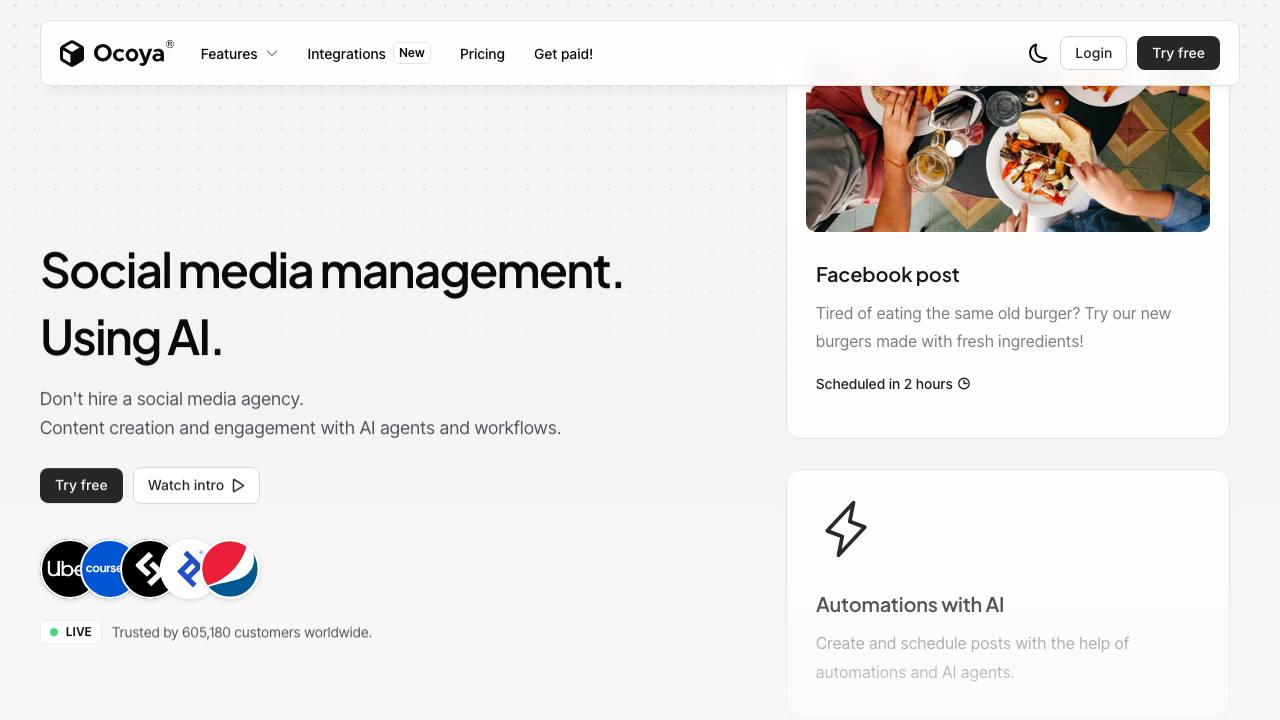
Ocoya's pitch is convenience: copy, design, and scheduling without leaving the tab. Its AI writes captions in dozens of languages, the built-in editor lets you assemble a graphic on the spot, and ecommerce integrations make it easy to spin products into posts. For a marketer who wants a single fast workflow from idea to scheduled post, it's a tidy, affordable all-in-one composer.
But "all-in-one composer" is not the same as "all-in-one marketing system." Ocoya speeds up making and queuing individual posts; it doesn't research your market, decide your strategy, manage your community replies, or coordinate ads and SEO into one plan. The AI is a productivity boost on a per-post basis rather than a delegated team. If your bottleneck is producing posts faster, Ocoya is a solid, cheap pick. If your bottleneck is running the whole function, that's the gap KAIROS fills.
Best for: Marketers and small teams who want to write, design and schedule a post in a single fast workflow.
Key features
- AI copywriting in 26+ languages plus a built-in design editor
- Ecommerce integrations to turn products into posts
- Bulk scheduling and a content calendar in one place
- Hashtag and post-idea generation
Strengths
- Copy + design + schedule in one fast flow
- Multilingual AI and ecommerce integrations
- Affordable for an all-in-one composer
Limitations
- Per-post productivity tool, not a strategy/management system
- No community management or cross-channel orchestration
How to choose (be honest about what you need)
The fastest way to overpay is to buy a marketing team when you needed a scheduler — or the reverse. Match the tool to the actual job:
If you you only need to queue posts cheaply and consistently…
Pick: Buffer — clean, affordable, with a real free tier.
If you you're an agency juggling many client accounts…
Pick: Vista Social — approvals, white-label reports, fair pricing.
If you you're a big team that needs governance and a unified inbox…
Pick: Hootsuite — roles, approvals and listening at scale.
If you your single biggest pain is producing the visual content…
Pick: Predis.ai or Ocoya — AI that makes posts, not just captions.
If you you want social — and the rest of your marketing — actually run for you…
Pick: KAIROS — a team of 10+ agents that write, design, publish, reply and report.
The verdict
If your need is narrow — schedule posts, recycle threads, crank out a carousel — one of the focused tools here will serve you well and cost less, and we genuinely mean that. Buffer for simplicity, Vista Social for agencies, Predis for visuals. KAIROS earns rank one for the broader, more common reality: most small teams don't want a better scheduler, they want the work done. A team of 10+ AI agents that research, write, design, publish, reply, and report — coordinated as one system instead of five apps — is a different proposition entirely. It's newer, and it's more than you need for bare scheduling. But if you've been doing all of this yourself at 11pm, that's exactly the point. Try it free for 7 days and see.